ICE Raids Through the Lens of a Trauma Psychologist
By Dr. Jackie Layton
Content note:
The actions of ICE in this country are horrifying and violent. This post names what many of us are feeling, outlines why this moment is so traumatic from a psychological perspective, and offers grounded ways to reclaim power and connection. Because of the subject matter, this may be difficult to read. I hope you are gentle with yourself and that you remember that you - we - do not have to withstand this alone. Collective trauma calls for collective healing and collective action.
What We Are Witnessing
By now, many of us have seen the horrors of these ICE raids.
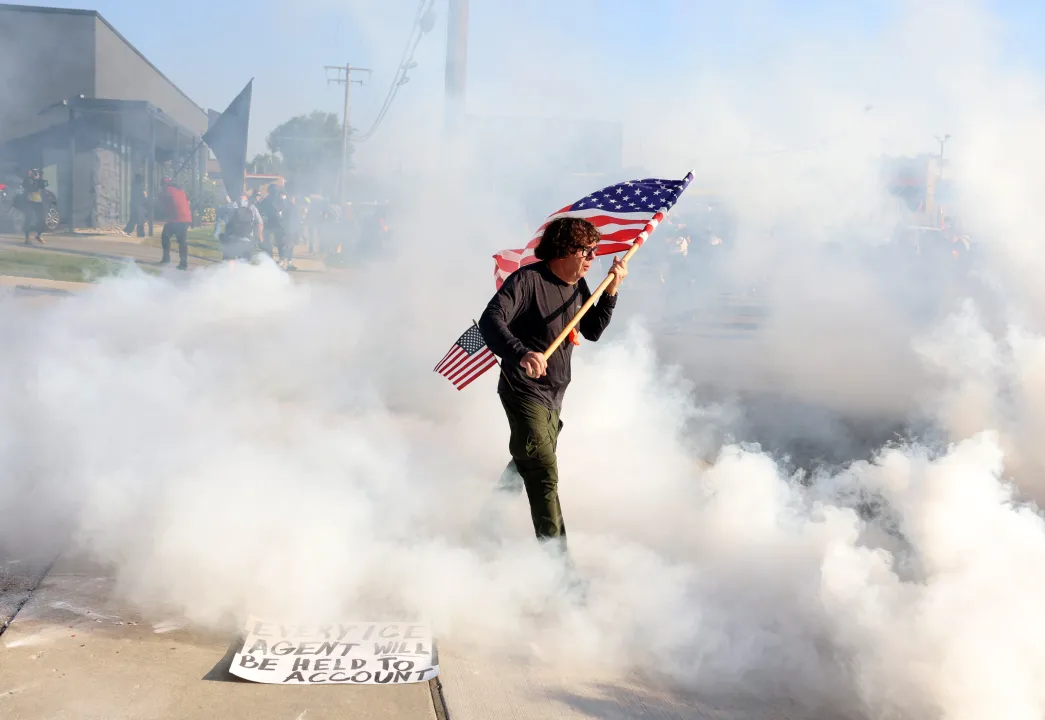
We’ve seen an apartment building raided in the middle of the night. Toddlers zip-tied. Masked men breaking into homes. We’ve seen an ICE agent kill a woman on a residential street in Minneapolis.
Because these are happening just outside of our homes, workplaces, schools, and stores, the violence is intentionally permeating our daily lives. As we saw recently when ICE broke down the door of an elderly U.S. citizen and dragged him outside into 10-below-zero weather in his underwear, even our homes no longer feel safe.
If you find yourself swinging between fear and numbness, that is your nervous system warning you of danger. And it’s a fair warning.
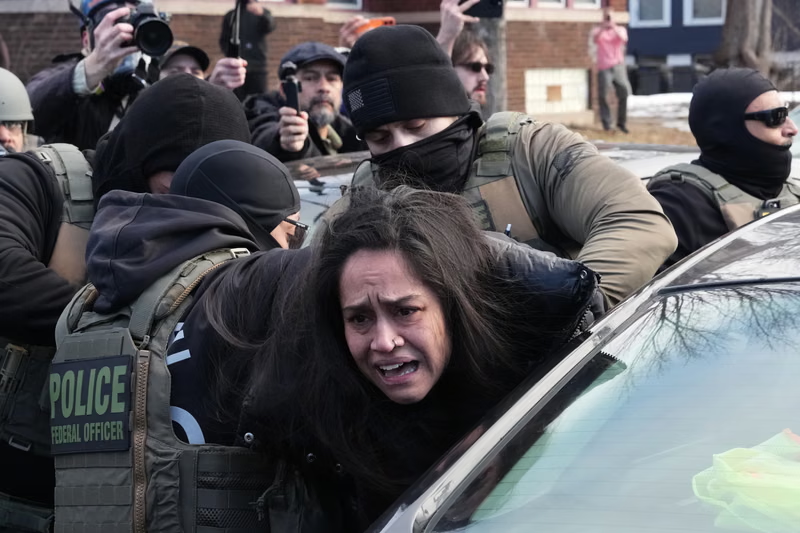
We’ve watched ICE agents violently grab a crying woman by her hair and throw her to the ground. We’ve seen weapons pointed at unarmed and peaceful people. We’ve seen agents fire into crowds and neighborhoods, and even joke or laugh afterwards.
In a country that claims to value free speech, protest, and mutual aid among neighbors, this is chilling. And I think it leaves many of us thinking the same thing. That could be any of us.
Why This Feels So Traumatic
Trauma is not just what happens to us. It’s also how we experience the threat (directly, indirectly) within a greater context. There are many reasons these raids are creating such a profound psychological impact. I’m going to highlight five of these for now.
1. This Reopens Old Wounds
This is not the first time the U.S. has perpetrated campaigns of violence against black, brown, indigenous, immigrant, LGBTQ+ and other marginalized communities.
For many of us, this moment activates historical, generational and personal trauma. In my therapy practice, I work with survivors of gun violence, chilhood abuse, combat, sexual assault, domestic violence, police brutality, trafficking, poverty, and displacement. In so many ways, what’s happening now creates a familiar feeling for trauma survivors. This past week, I spoke with one client about how the violent arrests and detainment brought up fears for them of having been trafficked and trapped. Another client shared how the words of these ICE agents in videos and even of our leaders and president sound like the things that she used to hear from her abusive ex. Another client reflected on childhood abuse and the familiarity of feeling continually on edge - continually unsafe. Another shared what it’s like to experience this after having left a country where similar violence was happening in the streets. Still others may notice generations old stress and fear arising, given how their family survived such violence before.
In the face of survival, we can find resilience and strength (not because of the trauma but because of ourselves despite the trauma). However, survival can also mean feeling that continual static in our heads of fear, vigilance, and grief. If you are noticing that, some part of you may be recognizing familiar signs that whisper internally, “We aren’t safe again.”

2. Unpredictability Makes it Worse.
When threats are unpredictable (in that we don’t know when or where they can happen or it feels like the “rules” of a decent society have been abandoned) our nervous systems can shift into hypervigilance or shutting down.
When veterans describe deployments, for instance, I’ve been struck by the constant unease and restlessness that comes with “not knowing” when things are going to go down. Sure, you expect danger in firefights, but, they also describe sudden horror in benign moments. Moments of driving when a convoy hits an IED, or sleeping when the base is mortared, or working with an allied national you feel you’ve really gotten to know. With ICE raids happening in our homes, work, schools, or even outside courtrooms, the rules about where we think we should be safe are broken. This unpredictability prevents us from ever truly feeling safe and exhausts us.
And to be honest here, the breach of these social contracts isn’t new. We generally agree on how children or elderly “should” be treated, for instance. We see moments where people in power break these rules - police brutality, mass abuse against native children in boarding schools, and child trafficking or abuse. However, seeing ICE agents so blatantly break those rules day after day in new ways is chilling and demoralizing (likely by design). We’re seeing ICE gas children, assault teenagers, and leave babies or young children abandoned in cars or neighborhoods knowingly after violently detaining their parents in front of them. We’ve seen a group of ICE attack an elderly man, breaking his ribs. Drag another elderly man from his shower and home. And a general lack of restraint when violently tackling elderly or children.
This unpredictability, born from a realization that things could happen to anyone at any time, robs all of us of safety or predictability in our daily lives.
3. Powerlessness Intensifies Trauma.
These raids are designed to render people powerless.
We see footage of individuals calmly stating that there has been a mistake or that they are citizens, only to have their windows smashed, bodies dragged out, and autonomy stripped away. ICE are attacking and overpowering people in groups. And once someone is in their custody, agents detain them in centers where families and lawyers struggle to locate or reach them.
Powerlessness is a key predictor of PTSD. Repeated exposure to uncontrollable harm can lead us to shut down, go numb, or sink into despair. They appear to be trying to create something that psychology calls “learned helplessness.”
And fascism depends on this. Compliance and detachment are not accidental outcomes; they are the whole point. These raids appear to be designed to convince us we are powerless. And although I do recognize the severity and horror of this moment, I’m relieved to tell you with confidence that they are deceiving us. We are not actually powerless.
4. This is personal.
Even if you’re not directly targeted as an immigrant or a dissenter or a trans person, you probably know someone who is. A neighbor. A coworker. A friend.
For many communities, these images echo historical trauma from forced removals, internment camps, police violence, and slave patrols. These memories and experiences live in our bodies, stories, and culture.
It also feels personal because they are targeting dissenters and nearly all of us value our right to dissent. ICE agents are targeting people who protest, observe, organize, and simply exist in ways that a particular agent decides they don’t like. If we can be profiled by how we look or talk (whether or not we are citizens or legal residents), assaulted for dissent (whether or not we are practicing our legal rights), and targeted on a whim, then these are no longer operations about “immigration,” “crime” or anything else. They are operations to silence the voice, humanity, and values of everyday Americans. And that is personal for all of us.
5. It’s All Happening at Once.
This is not isolated to any one city or incident. The scars being left on our neighbors in LA, Portland, Chicago and Minneapolis are very real. But these attacks, policies, and threats are pervasive across the US.
ICE are doing these raids in our communities while we are already dealing with ongoing political erosion, increasing costs of groceries, attacks on critical food or financial support for families in poverty, doubled or tripled costs of health insurance, layoffs, and constant crisis-driven news cycles. What used to feel like a year’s worth of stress now hits us weekly in our feed.
And our systems are overwhelmed.
What This is Doing To Us as a Community
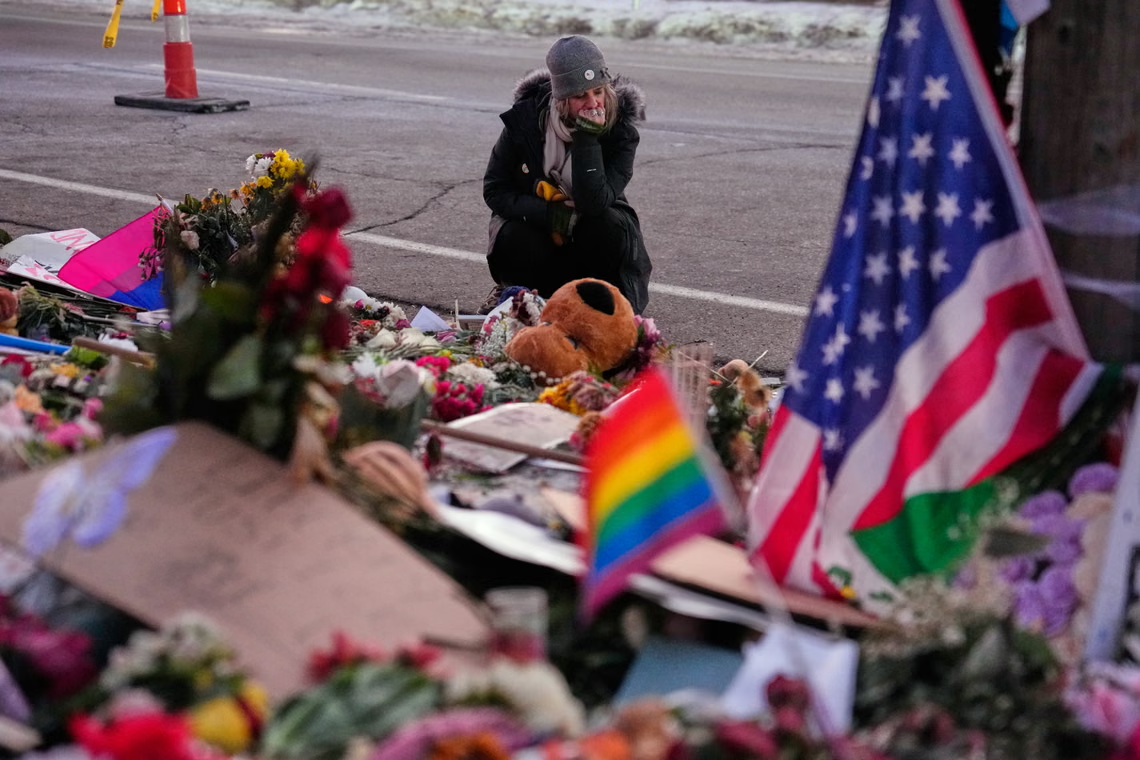
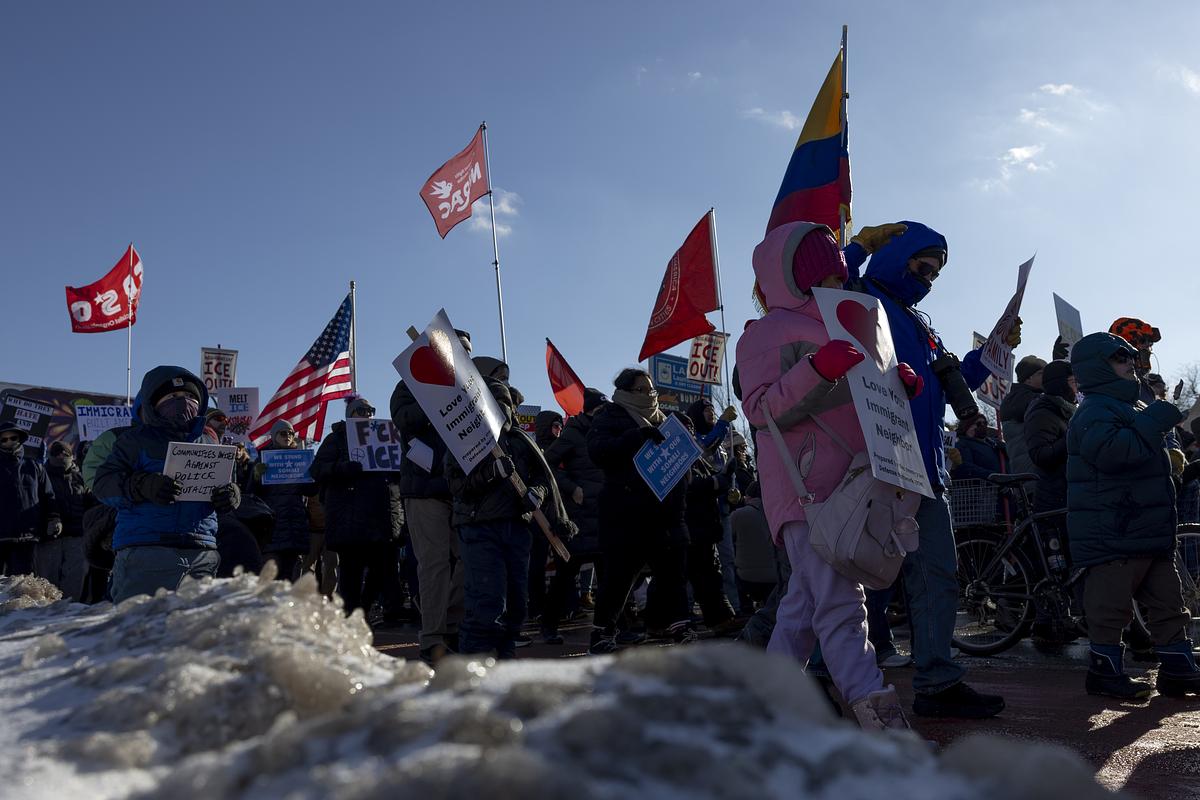
We are not just experiencing individual trauma, but also secondary trauma from witnessing harm, collective trauma from shared community wounds, loss (of safety, loved ones, and of the democracy we thought we had as a country), and betrayal. Betrayal on so many levels.
And in the face of these layers of trauma, I want to draw your attention to how hard it is to truly feel for others, but also how important that is. Empathy is the foundation for our community, mutual aid, collective action, and change.
What We Can Do Right Now
There are a few things we can do to ground ourselves, reclaim power and agency, and stay connected even when it feels like so much right now. Let’s talk about how to do that.
1. Let yourself feel (with support and intention).
Name what you are feeling without minimizing it. You can say, “I’m afraid.” Or perhaps, “I feel angry and betrayed.” Notice what that feels like, and maybe even how you feel physically. Do you feel tension anywhere, a restlessness, a heaviness? Try to notice however you are feeling without judging yourself for it. What’s happening is unjust, dangerous, and complex. Our emotions may be complex too.
Then, ask yourself what this feeling tells you about what matters to you. For instance, “I’m angry because I believe people should be treated with dignity. I am not okay with this.” Or perhaps, “I feel devastated - I want to cry. This is telling me that I genuinely care about our community and I want better for myself and my kids. I’m so sad that we are all having to live like this. This isn’t the future I imagined for our community.”
This step is likely the hardest one. It’s hard to notice what our emotions are telling us. It’s so hard not to reach for your phone to doom-scroll or distract yourself. But one thing you can do to keep in touch with yourself, your values, and better show up in our communities is to pause, name what you are feeling, talk it out, and seek support.
2. Reconnect With Community.
In trauma, there’s isolation. In healing, there’s community.
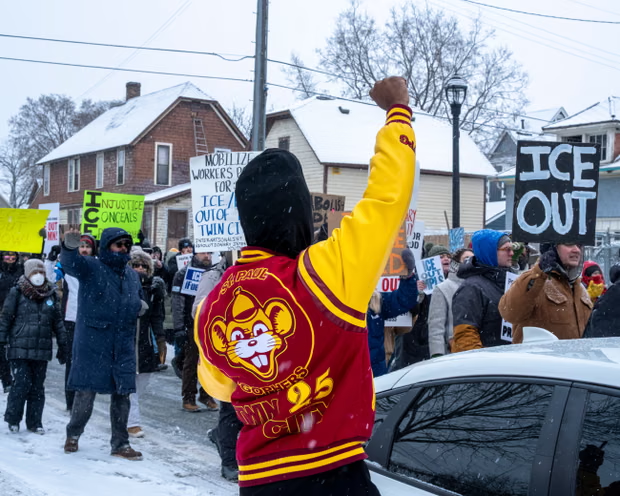
Remind yourself that you aren’t alone. This is so important, especially in our hyper-individualistic culture. You may be feeling overwhelmed because some part of you is trying to find individual solutions to collective problems. Don’t do that. Bring these things back to the group. Seek community. Sink into a long hug. Read physical books from the survivors and activists who came before. Watch or listen to singing protests. Pay attention to the artwork of the revolution. And remind yourself that you are part of a vast and diverse collective of people who reject this violence.
3. Choose Where Your Attention Goes
In the age of algorithms, it can be hard to protect the precious resource that is our own attention. It can be done though.
We want to stay informed and involved. We want to take in important information. And there is power in cultivating your personal algorithm. You can do this by choosing what sources you follow or engage with. You can decide how much time you spend on social media versus in person with real people or in action doing things for yourself and others.
You may find it is helpful to both follow a few news sources that you trust to have good fact-checking, and to also check in with people who are taking action. You can intentionally choose to pay attention to not just what we are facing, but you and others can do.
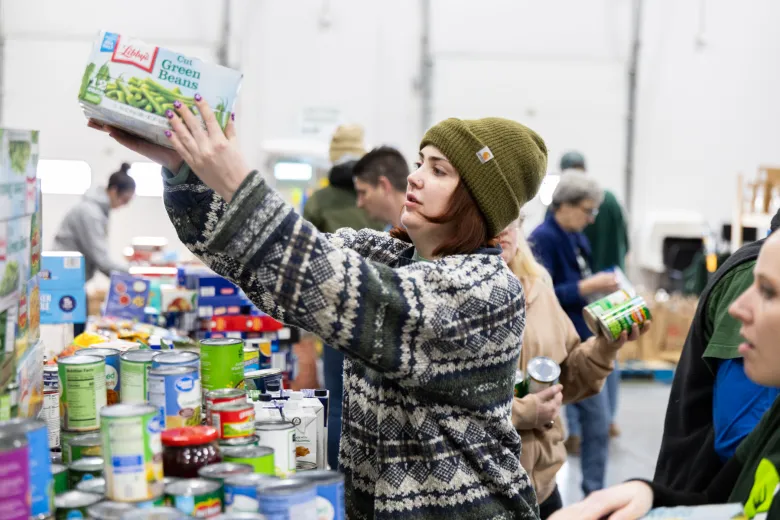
When it comes to attention and focus, it can be helpful to decide what you most value or where you have specific skills and to focus on that. We all have our limits and no one of us has to be fighting on all fronts. Instead, is there something in particular you can be a steward of and pay attention to? For instance, some parents have focused their time and energy on local daycares, and on children and teachers safely getting back and forth between home and the school. Others have focused their efforts on food, who needs it, and how to help donate and organize. Others are tracking ICE activity and showing up to legally observe, document, and send footage to organizations collecting this for the support and needs of victims and families.
4. Remember that rest sustains resistance.
Our burnout and overwhelm benefit oppressors.
In addition to noticing what and where your focus goes, you can also consider your energy and capacity. I was just speaking with a client who is afraid to leave home and is needing more support. It’s okay to rest, seek support and community, and lean on others. Resilience comes from respecting our own capacity and leaning on one another as we need to.
Moments of rest and joy are not indulgences. They are part of what keeps us going. They are part of our resistance.
5. Reclaim Small Forms of Power
In therapy we often teach people to reclaim agency through small but meaningful actions. We can reclaim our sense of power and normalcy by trying to give ourselves as consistent a routine as we can. We can get up and get dressed even if we are working from home or staying in. We can clean or tend to our home spaces or spaces of relative safety. We can check in with loved ones or do one small thing for a local cause (e.g., donate food). Each of these acts can help us push back against the helplessness.
Closing Thoughts
These ICE raids are not just policy enforcement. They are being carried out in ways that maximize fear, unpredictability, chaos, and powerlessness.
As a trauma psychologist, I can tell you: it would be difficult to design an approach to ICE raids that is more traumatizing than this. The unpredictability. The helplessness. The stakes. The echoes of history. All of it creates conditions for deep and lasting harm.
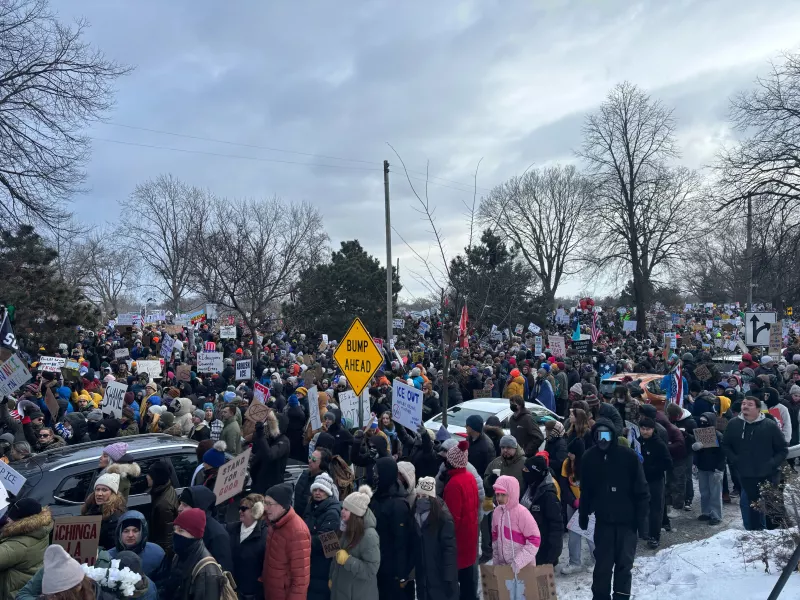
You are not wrong to feel upset. You are not being alarmist to focus on community action, safety, and collective care.
I also want to remind you that healing is possible, even after complex personal and collective trauma. But it will require connection, sharing our stories with one another, and engaging in shared action. If you are feeling afraid, sad, angry, or whatever else - you are not alone. And we do have one another for support.
Resources:
Free Red Cards, printed, many languages available, outlining your rights: https://www.ilrc.org/community-resources
National Immigration Legal Services Directory: https://www.immigrationadvocates.org/legaldirectory/
Since writing the first draft of this blog post in 2025, John Oliver and his team at Last Week Tonight have produced an episode on Deportations and ICE raids which provides helpful insights into what’s happening. And at the point of this edit for additional information, even that episode feels like it was so long ago. There has also been a documentary on the experiences of detainees that you can find on YouTube, along with in depth discussions and explorations. I personally enjoy historian Heather Cox Richardson’s letters and YouTube/Facebook live discussions about the historical contexts for these moments we are facing.

.jpg)