Feeling Powerless? How to Find Your Footing in a Changing World
When the Ground Keeps Shifting
You sign in to work and see that your company has implemented new policies, your manager had "feedback" for you, and there are so many things - too many things - to do already. You still believe in your work, but are watching federal policies change what that work can look like and who you can help. When you seek out news now, the country feels unfamiliar.
Every day, people are signing into therapy and consulting sessions, talking about how much is changing.
When I look around, my community is facing an affordability crisis, climate crisis, state-sanctioned violence, and layoffs. I can see the signs of people struggling all around me. These rapid changes are all around us in the grocery store, our daily work lives, and when we connect with friends.
If you've found yourself looking up at massive, collapsing systems, or watching the wide-reaching effects of the wealthiest among us on the rest of us, it can be easy to start feeling small, overwhelmed, frozen, or powerless. But there are little things we can do.
The first among us to feel this were the more emotionally attuned, justice-oriented and empathetic folks. Many of the kindest folks felt this soonest and were told we were overreacting or worrying too much. We aren't going to do that in this article. You are not overreacting when you grieve loss, rage against injustice, and witness collapse or brokenness. Your emotions - all of our reactions - are telling us something important. Powerlessness is a very human response to situations where things feel bigger than us. We aren't wrong to notice the scope of these problems, the terror of consolidated (and further consolidating power) at the top, and to hurt for those we see suffering. The data backs what we are witnessing. However, noticing and suffering are different things. We can see the shifting, the changes, the power dynamics, and not have to remain in this state of powerlessness.
A massive media industry (owned by the very billionaires harming so many of us) has been sewing fear and anger between us to keep us overwhelmed, consuming content, and not taking action. The difference between hope and powerlessness is action. In both cases we are aware, we are unable to stand for what we're seeing, but then the road forks. And the question at the fork is what we do with this feeling.
I'm going to walk you through that very thing in this post so grab a pen and paper and let's dive in.
Step 1: Give it Shape.
As I mentioned above, the first step for both hope and powerlessness is awareness. We can notice what we're seeing and name it. Naming things helps us take heavy and shapeless feelings inside of us, pull them out in front of us one-by-one for examination, and allows us to acknowledge its form.
Your feelings are a signal, calling your attention to something. But the something we need to fix is not you. You may be facing problems, but you are not the problem. So our first step is to notice the signal and hold that thing out in front of us.
You can ask yourself: What? What am I feeling and what happened?
I woke today with a pit of dread in my stomach, and paused with that for a moment. I realized that I've been hearing about a recent highly publicized sexual violence case both in the news and in sessions. I realized that I and the survivors I work with are bracing ourselves for that inevitable moment when the media feels it has gotten all the clicks it can and moves forward. The first step is noticing it and naming it.
What are you feeling and noticing today? What's sticking with you right now?
Step 2: Anchor in Your Values.
After you notice what you're feeling and experiencing, it's time to take it a step deeper. We can get distracted by the content of our worries and imaginings, but really these thoughts and feelings are signals back to what we actually care about.
So next, ask yourself: What does this feeling tell me about what matters to me?
You can write down things you care about. Perhaps even asking yourself, in this massive storm, even as systems collapse, what do I want to keep holding?
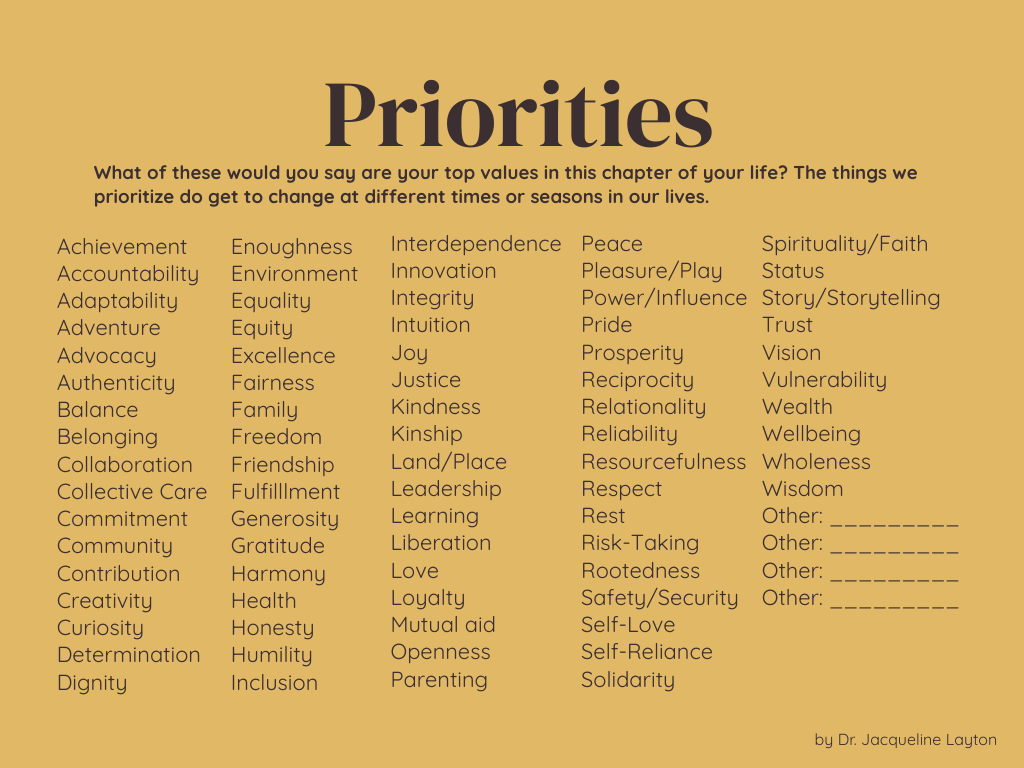
You can also look at a list of values, and identify the ones most important to you in this chapter of life.
Grief, anger, and fear often show up to tell us that something or someone we care about has been lost or threatened, for instance. I grew up in Minnesota and have continued to connect with fellow Minnesotans. Watching violence perpetrated against our communities broke my heart. I can hear echoes of their voices in my head from video clips. I felt it in my chest when Minneapolis residents came together to remember neighbors who had been killed by federal ICE officers. This grief and rage reminded me of my love for my community, and how important that solidarity was, even if I'm living in the Austin, Texas area right now. When you realize it's your love for collective care and community being alerted, that gives insight into not just what you are feeling, but what to do with it.
Notice what you're feeling right now. What feels most important? I know you may be being pulled in many directions, but let's say you could only carry 5 things right now. What do you refuse to set down? This could be your closest relationships, how you're choosing to parent, your care for the climate, or making meaningful art. It could be your health, your neighbors, your sense of humor. There's no "right answer." It's very personal to us and actually changes throughout our lives, chapter by chapter.
Some days you may have more capacity and you can certainly feed into other values on those days. But for the tough days, where you have teacup-sized capacity, what makes it in? Many of us want to do so much more, but caring from capacity is a way to care for our own humanity and to approach things in more emotionally sustainable ways. Choosing top priorities is less about giving up on other areas and more about deciding where your limited and precious energy goes first.
And, because hope is a combination of feelings, clarity, and action, our next step is to get moving.
Step 3: Brainstorming Action
Naming our values is one thing, but knowing how to live them and feed into them is another. I've seen how trying to do both can get overwhelming in therapeutic work, so I careated an exercise for my client that I call a Values Constellation.
For so long, when people have felt lost, we looked up and saw patterns in stars to help us find our way. Your Values Constellation does the same. Start where you stand in your own power, and to choose the values you'll navigate by in this chapter of your life. Then, brainstorm the actions (big and small) that move you toward each value. As you brainstorm, you'll notice some actions and practices come up in multiple places. Where those lines cross, you'll find your brightest stars - actions that light up more than one value at once.
Let's do this exercise together.
For each priority, I want you to brainstorm things you can do on a daily or weekly basis towards those priorities. Some are micro-actions. Others may be bigger. Try to refrain from editing or judging or starting these yet. We're just getting them on the page.
If you want to care for your relationships for instance, that could look like protecting a weekly date with your partner, reaching out to a friend just to check in or say hi, or starting a recurring first-Friday board game night.
.jpg)
If you care about the climate and are feeling climate anxiety and climate grief, that could look like joining groups already doing the work you believe in. It may mean advocacy, policy writing, conservation work, or even something less expected. Are you an accountant or brilliant with organizational management? These organizations likely need your skills too.
This can also be smaller things to embrace, experience and be a steward for nature. It could mean taking nature walks, caring for plants or a garden perhaps, going to local fashion swaps or other sustainable community events.
There's a lovely realization in this; you don't have to learn a whole new skill to help (unless you want to). There may be something, even something small, you can do right now. Any movement or rebellion has many members and roles.
A therapist for instance could potentially support climate justice by offering sessions, education, and community workshops to help activists and heart-led folks find community and heal from burnout. We can create free resources (like this) and try to help others regain agency and hope.
Architects, packaging designers, and are other makers can be intentional about materials, suggestions to their clients, and the ways things can be made more sustainably.
A filmmaker or videographer can give voice to different stories. Teachers can support Environmental Studies, Ecology, and Conservation students interested in creating values-aligned projects.
Are you a writer, a designer, a copywriter? There are already organizations who would benefit from what you already do well.
I included my own examples here to further illustrate this. Knowing these concepts doesn't mean you are forever-fixed. We are human and therefore always evolving and changing. This helps us navigate those changes.
.jpg)
Here's an example of how you can fill out this Constellation.
I considered my own feelings recently and noticed how many ways and directions I feel pulled. I hurt for children experiencing starvation, am upset by ways venture capitalists and insurance companies are hurting the field of mental health, and grieve for people I care about who are suffering through violence, financial distress, and overwhelm.
Part of what makes our humanity and loving acts so meaningful is that we all have limited capacity and therefore make choices about what we each choose to hold as important. What we choose to focus our limited time on and who we choose to be in community with all feed into the person and society we’re becoming.
In this chapter, I wanted to focus on intentional parenting for our children. As a cycle-breaking mom and someone trying to raise our children in a home of safety, love, and respect, this is something incredibly important to myself and my partner, Justin.
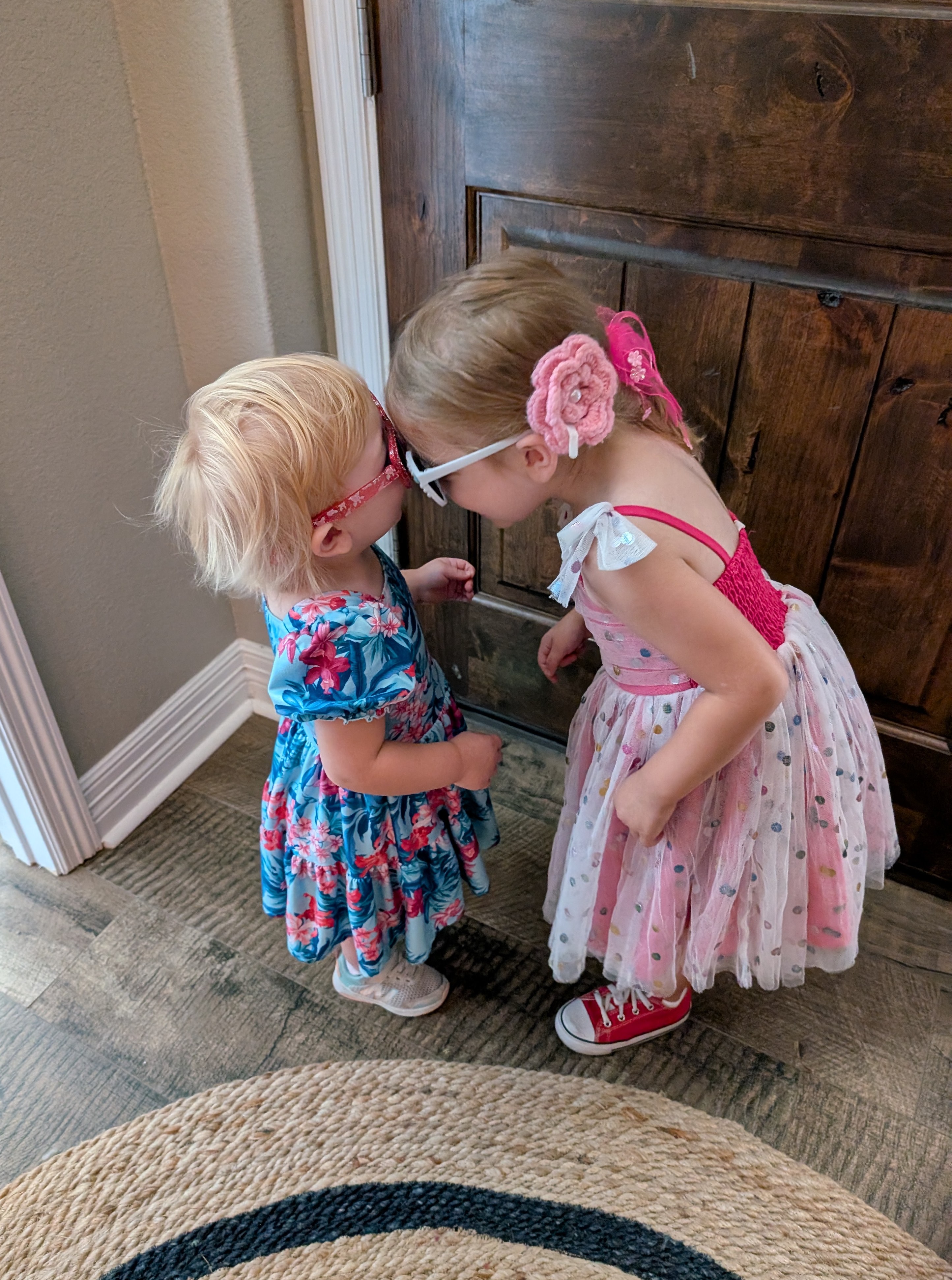
Justin and I do things every day to feed into our family relationships and to nurture this value of intentional parenting. And there’s always more to do. The laundry is behind right now. We haven’t gone on family walks as often as we wanted this week. But we do know that there are actions we can and do take that fit these values.
Each day we can prioritize protected family time, screen-free dinners, focusing on transitions (e.g., being present for send off when the kids go to daycare, reconnecting together when the kids come home, and bedtime with routines and stories together), for instance.
These also link to one another. By having these moments of screen-free, protected family transition times, we are feeding multiple values. That’s why these are highlighted below as brighter spots in the constellation.
We also love doing fun crafts and activities together. This can be small - like painting rocks together since our kids are definitely in painting and rock collecting phases - as well as family nature walks, trips to the neighborhood pool, or going to local community parks and events.
These activities also feed into caring for our health goals (getting outside walking, swimming, playing and moving), and embracing curiosity and play. These have become brighter stars for guiding us towards feeling more healthy, connected, and human together.
The last bright spot I’ll point out involves daily writing and reading. Each day I spend a little time absorbing long-form content and learning, writing, and fostering that curiosity and advocacy. These moments help me feel purpose as a psychologist, active in collective care and advocacy, bring my family stability, and foster my curiosity and joy as a human. So these too are bright spots in my constellation.
.jpg)
Why This Works
From a psychological perspective, this process can help us in building agency and intentionality. You are looking at what matters to you, considering a variety of possibilities for aligned action, and choosing one small step forward. And in doing so, there is a part of you that will then see you making action.
Hopelessness and powerlessness comes from awareness of concerns but feeling stuck or witnessing ourselves unable to act. That reinforces this idea that there is nothing we can do (even if that's not true). This intentional process is meant to be simple, actionable, and effective for breaking that cycle of powerlessness.
Every one of these actions you take become more evidence that there are things you can do. This taps into a process we call "building mastery."
These steps also build momentum. As we do things, it helps make other things feel more do-able and approachable. This taps into a strategy called "behavioral activation."
Another reinforcing benefit from this is that it tends to get us connected to people and communities. These actions can help you feel connected with humanity and with what matters to you. They can also get you out into the world, joining people in efforts, and getting social support and encouragement.
When we feel supported, connected, and engaged, we tend to also feel better. I like to tell folks that you aren't just reminding yourself of what you can do, but that you aren't the only one who has to do it. That can help us feel less stressed and to think more expansively (and creatively!) again.
Start Your Upward Spiral
Listening to your feelings, navigating using your values as direction, and taking an action step are together a lovely act of cycle-breaking. Not only does it break the downward cycle, but helps you start moving in an upward one. Rather than silencing your feelings, you are listening to them. Rather than just reacting, you are taking time to give yourself the deeper care of taking more intentional and values-aligned action to help you feel whole and connected. And you are taking action.
You don't have to fix the systems of power we're facing - this isn't a "chosen one" type of story. You can find your footing one meaningful step at a time.
Sending solidarity and care,
Dr. Jackie Layton
P.S. My hope is you will walk away from this article noticing that hey - those two delightfully nerdy millennial toddler parents who care “too much” and dive in full-hearted are surviving this. Even though it’s really hard. And you can too.
I do not encourage comparing our successes to your struggles. I promise we have struggles too. Goodness we do. But we build hope and push back against powerlessness not by telling ourselves everything is fine, but by focusing our effort and energy on what we can do something about (and who we want by our side in the rebellion).
.jpg)